
Introduction
Many people notice flakes on their scalp and think it is just dandruff. However, sometimes a flaky scalp is a sign of something more serious, like scalp psoriasis. Understanding the difference between dandruff vs. scalp psoriasis is important. After all, the right treatment depends on knowing what is really causing your symptoms. In some cases, you may even need a clinical prescription to get relief.
What is Dandruff?
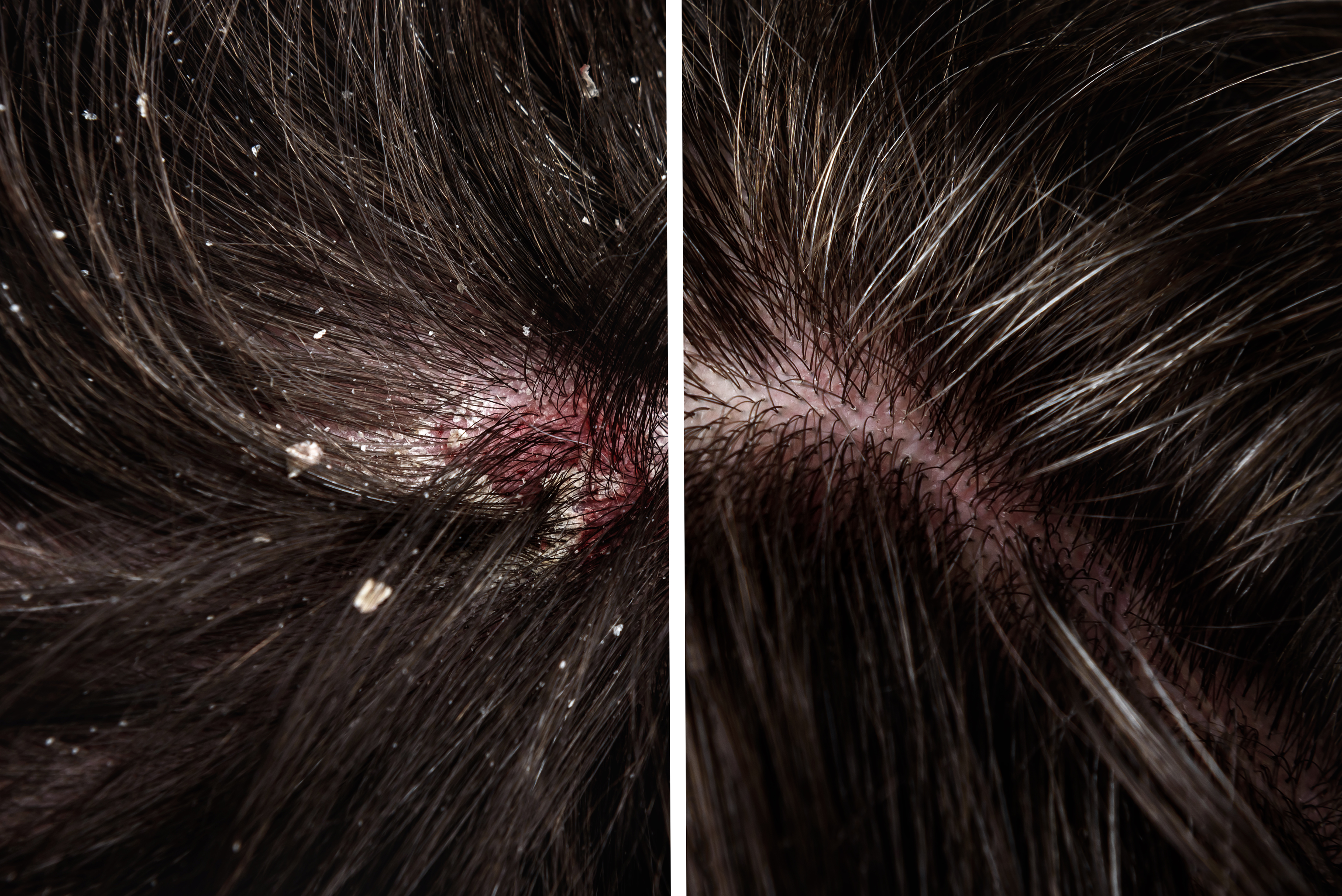
Dandruff is a common scalp condition. It causes white or yellow flakes to appear on your hair and shoulders. Often, your scalp may feel itchy or dry. But usually, dandruff is not painful or red. It is not contagious, so you cannot catch it from someone else.
Sometimes, stress or cold weather can make dandruff worse. But with the right care, it often improves quickly.
What is Scalp Psoriasis?
Scalp psoriasis is a long-term skin condition. It causes thick, silvery scales and red patches on your scalp. Unlike dandruff, scalp psoriasis can be painful or cause burning. It may also spread to your forehead, neck, or behind your ears.
Scalp psoriasis is not contagious. However, it often needs special treatment from a doctor.
Key Differences Between Dandruff and Scalp Psoriasis
At first, both conditions may look similar. But there are clear differences. Knowing these can help you decide when to seek help.
Because these signs can overlap, it is easy to get confused. Yet, proper diagnosis is key for the best treatment.
Diagnosis: When to See a Dermatologist
Sometimes, home treatments do not help your flaky scalp. In that case, it is time to see a dermatologist near you. A doctor can look at your scalp and ask about your symptoms. Sometimes, they may take a small skin sample to check under a microscope.
See a dermatologist if you notice:
Early diagnosis helps you get the right care and avoid more serious problems.
Treatment Options: Over-the-Counter vs. Prescription
For mild dandruff, over-the-counter shampoos often work well. Look for products with zinc pyrithione, selenium sulfide, or ketoconazole. These help control flakes and itching.
However, scalp psoriasis often needs stronger treatments. Your doctor may prescribe:
Because some treatments can have side effects, always follow your doctor’s advice. Never use strong steroid creams without a prescription for scalp conditions.
Prevention and Scalp Care Tips
While you may not prevent every case, good scalp care can help. For example, you can:
In addition, always rinse your scalp well after using shampoo or conditioner. This helps prevent buildup that can lead to flakes.
When a Clinical Prescription is Needed
Sometimes, home remedies and store-bought shampoos are not enough. If your flaky scalp does not improve, you may need a clinical prescription. For example, scalp psoriasis often needs prescription creams or special treatments. A dermatologist can help you find the right solution for your scalp condition.
Remember, using the wrong treatment can make things worse. So, always check with a healthcare provider if you are unsure.
Conclusion
In summary, knowing the difference between dandruff vs. scalp psoriasis is important. Both can cause a flaky scalp, but they need different treatments. If you are not sure what is causing your symptoms, do not wait. Consult a dermatologist at Dermashrii for personalized advice and the right prescription for your scalp condition.