
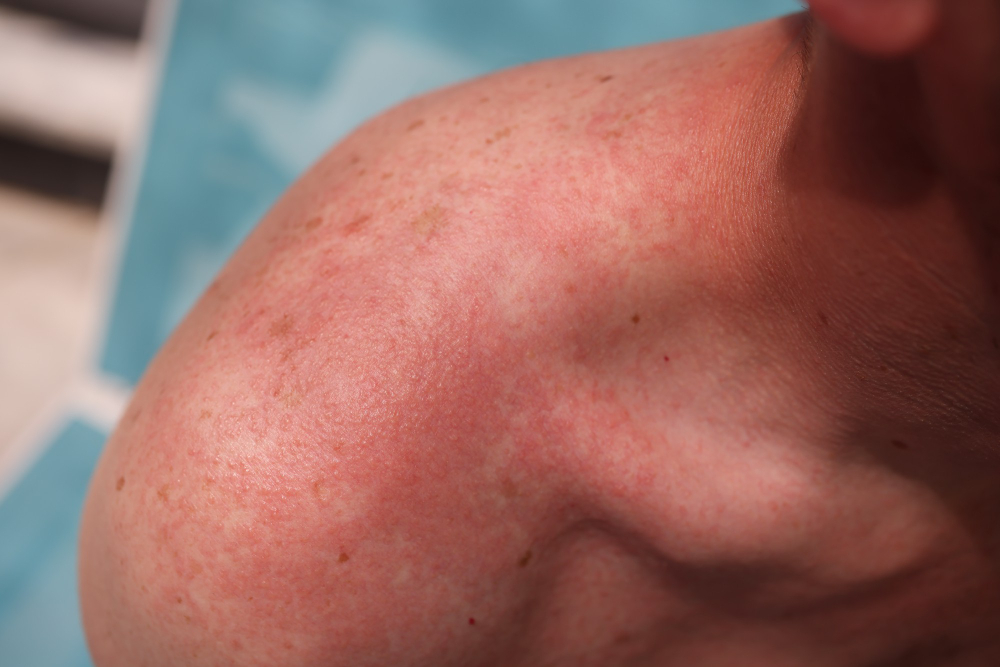
What is Actinic Keratosis?
Actinic keratosis is a rough, scaly patch on the skin. It often appears after years of sun exposure. Because it is a precancerous skin lesion, actinic keratosis is a warning sign of sun damage. While these spots are not cancer, they can turn into skin cancer if left untreated. Therefore, early detection is important for skin cancer prevention. According to the CDC, actinic keratosis is common in adults over 40, especially those with fair skin.
Symptoms of Actinic Keratosis
Actinic keratosis can look different from person to person. However, there are some common signs to watch for. For example, you may notice:
Usually, these patches appear on areas that get a lot of sun, such as the face, ears, neck, scalp, hands, and arms. Sometimes, actinic keratosis can be easier to feel than to see.
Causes and Risk Factors
Long-term sun exposure is the main cause of actinic keratosis. Ultraviolet (UV) rays from the sun damage skin cells over time. As a result, precancerous skin lesions can form. Other risk factors include:
Because sun damage builds up over the years, people who work or play outside are at higher risk. For example, gardeners, construction workers, and athletes should be extra careful.
Diagnosis
If you notice a new or changing spot on your skin, it is wise to see a dermatologist. Usually, a doctor can diagnose actinic keratosis by looking at your skin. Sometimes, they may take a small sample (biopsy) to check for cancer cells. Early diagnosis helps prevent skin cancer and allows for simple treatment. According to the American Academy of Dermatology, regular skin checks are important for everyone, especially those with a history of sun exposure.
Treatment Options
There are several ways to treat actinic keratosis. The right choice depends on the size, number, and location of the spots. Common treatments include:
Most treatments are quick and done in a dermatologist’s office. After treatment, it is important to protect your skin from further sun damage.
Prevention Tips
Because actinic keratosis is linked to sun damage, prevention is key. You can lower your risk by following these tips:
Even on cloudy days, UV rays can harm your skin. Therefore, make sun protection a daily habit.
When to See a Dermatologist
If you notice a rough, scaly patch that does not heal, it is time to see a dermatologist. Also, if a spot changes in size, color, or shape, get it checked. Early treatment can prevent actinic keratosis from turning into skin cancer. For personalized advice and early detection, consult the best dermatologist at Dermashrii.